

Custom doors offer far more than just curb appeal. They deliver tailored performance, improved energy efficiency, and a precise fit that standard options often cannot match. Behind that polished final look is a detailed installation process that requires careful planning, accurate measurements, and skilled craftsmanship. Understanding how professionals approach each stage can clarify why proper installation matters just as much as the door itself.
Installing a Custom Frame for a Precise Foundation
The installation process begins with the door frame, which serves as the structural anchor for the entire system. Professionals start by removing the existing frame and assessing the rough opening for any signs of damage, moisture intrusion, or structural irregularities.
If the opening is not square or level, adjustments are made to ensure a stable base. Even slight inconsistencies at this stage can lead to long-term issues like air leaks or improper door alignment.
Once the opening is prepared, installers measure meticulously to confirm that the dimensions align with the specifications of the custom entry doors. Shimming is then used to fine-tune the frame’s position, allowing for precise vertical and horizontal alignment. This step is critical because it ensures the door will swing smoothly and latch correctly without resistance. High-quality fasteners are secured through the frame into the surrounding structure to maintain durability and prevent shifting over time.
Weatherproofing is integrated into the frame installation to protect the home from the elements. Professionals apply flashing tape and sealants around the perimeter to create a barrier against water infiltration. Insulation is added between the frame and the rough opening to reduce drafts and improve energy efficiency. This combination of structural reinforcement and environmental sealing forms the backbone of a successful installation.
Aligning the Door Slab With the Frame
With the frame securely in place, attention shifts to the door slab itself. This component must be handled with care, especially when dealing with heavier materials like solid wood or steel. Professionals position the slab within the frame and attach it using precision-installed hinges. The placement of these hinges is calculated to distribute weight evenly and prevent sagging over time.
Alignment is a key focus during this stage. Installers test the door’s swing to ensure it opens and closes smoothly without rubbing against the frame. Adjustments are made by fine-tuning hinge placement or modifying shims behind the frame. The goal is to achieve consistent spacing around the edges, often referred to as “reveals,” which contribute to both functionality and visual balance.
Once alignment is confirmed, the latch and strike plate are installed. These components must line up perfectly to allow the door to close securely. Even minor misalignment can result in difficulty latching or increased wear on the hardware. Professionals take extra care to ensure that the locking mechanism engages effortlessly while maintaining a tight seal.
Adding Hardware, Glass Features, and Finishing Details
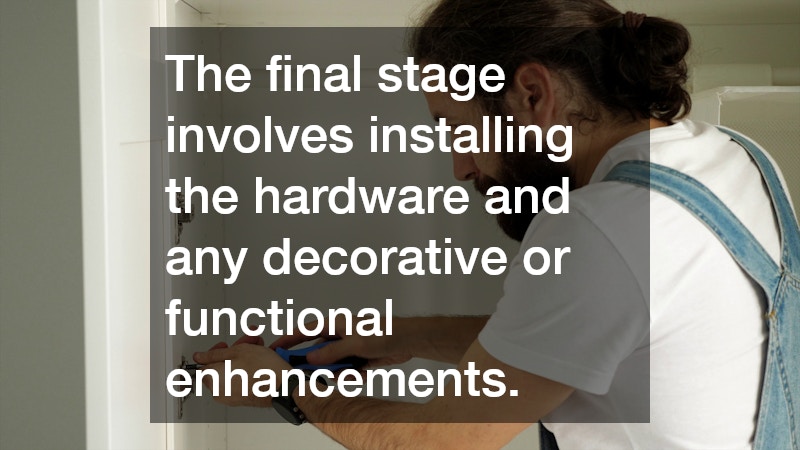
The final stage involves installing the hardware and any decorative or functional enhancements. Handles, locks, and deadbolts are carefully fitted to align with pre-drilled openings in the door slab. Professionals ensure that each component operates smoothly and integrates seamlessly with the overall design. High-quality hardware not only improves security but also complements the aesthetic of the custom entry doors.
If the design includes glass inserts or sidelights, these elements are installed with equal precision. Proper sealing around glass components is essential to prevent drafts and moisture intrusion. Installers use specialized glazing techniques and durable sealants to maintain both clarity and insulation. These features can significantly enhance natural light while preserving the door’s structural integrity.
Finishing touches are applied to protect and refine the installation. This may include painting or staining the door, applying protective coatings, and sealing all exposed edges. Caulking is added around the exterior trim to create a clean appearance and an additional barrier against the elements. These details ensure the door not only performs well but also maintains its appearance over time.
Installing custom entry doors is a multi-step process that demands precision at every stage. From constructing a perfectly aligned frame to fitting the door slab and integrating hardware, each phase plays a role in the outcome. Professional installation ensures that the door functions smoothly, resists environmental stress, and enhances the home’s overall value. When done correctly, the result is a seamless blend of form and function that stands the test of time.